← Essays · November 2, 2026 · 14 min read
Celebration of Life Book: How to Create One Your Family Will Keep
A celebration of life book holds stories, photos and voices, not just signatures. Learn what to include, how to gather memories and how to print or keep it digitally.
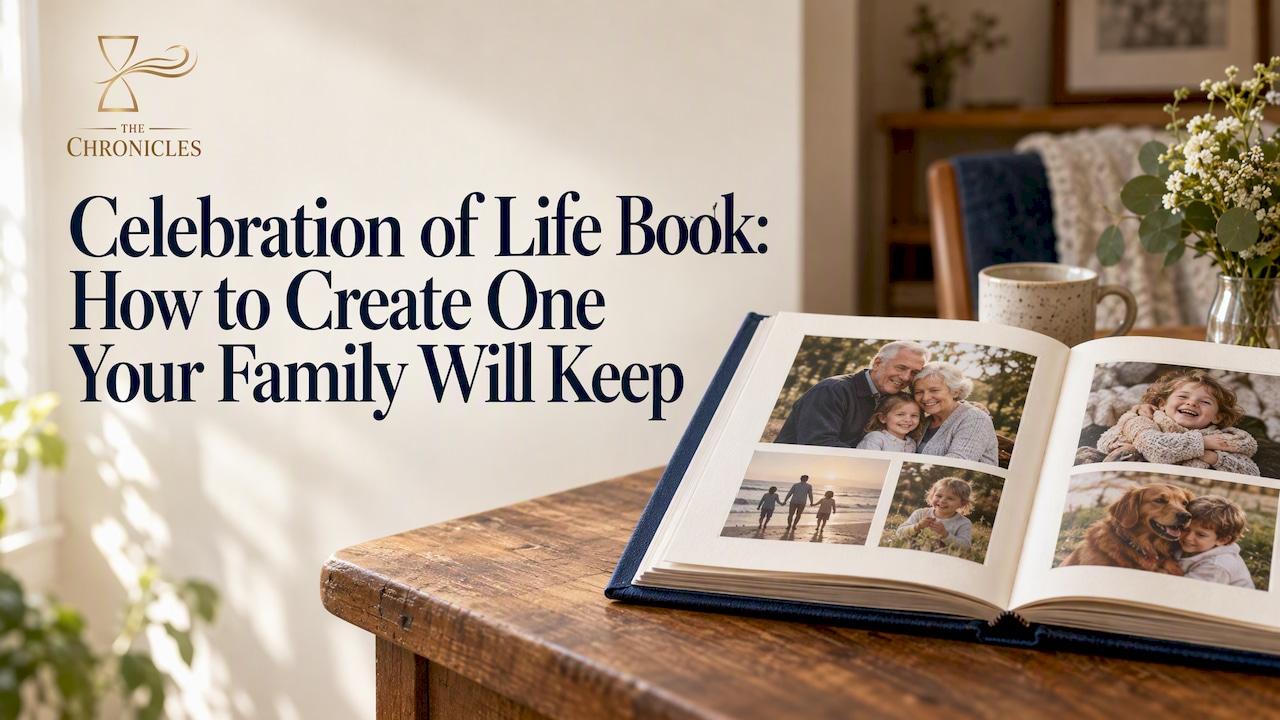
Celebration of Life Book: How to Create One Your Family Will Keep
A celebration of life book is a keepsake that gathers the stories, photos and messages that show how someone lived. A guest book only records who came. This book keeps the person: the way they told a joke, the kitchen they cooked in, the road trip everyone still talks about. You can make one in a few weeks, with help from the people who loved them, and you do not need design skills or a free weekend.
This guide walks you through what to put in it, how to collect memories from family and friends, how to choose photos, and how to end up with something you can hold and share.
TL;DR
- A celebration of life book is a memory book about the person. A funeral guest book is mostly an attendance record.
- Build it from four things: a short life story, photos with captions, stories from other people, and a few details only your family would know.
- Ask relatives and friends one small question at a time. A single prompt gets more stories than an open invitation to "write something."
- Choose 30 to 60 photos you love, not every photo you have, and let each chapter carry a few of them.
- Keep a digital copy as well as a printed one, and back it up in more than one place.
Table of Contents
- What a celebration of life book is (and how it differs from a guest book)
- What to include in a celebration of life book
- How family and friends can contribute
- How to choose and arrange photographs
- Printed, digital, or both
- A simple plan: from first idea to finished book
- Our perspective
- Turn memories into a book with The Chronicles
- FAQ
- Sources
What a celebration of life book is (and how it differs from a guest book)
A celebration of life is a gathering that honors a person's personality, relationships and accomplishments rather than centering on mourning. Funeralwise describes it as something that can replace a traditional funeral or happen alongside one, and as intentionally personal: stories, music, photographs, readings and food can all be part of it.
The book that goes with it can take two forms, and families often want both.
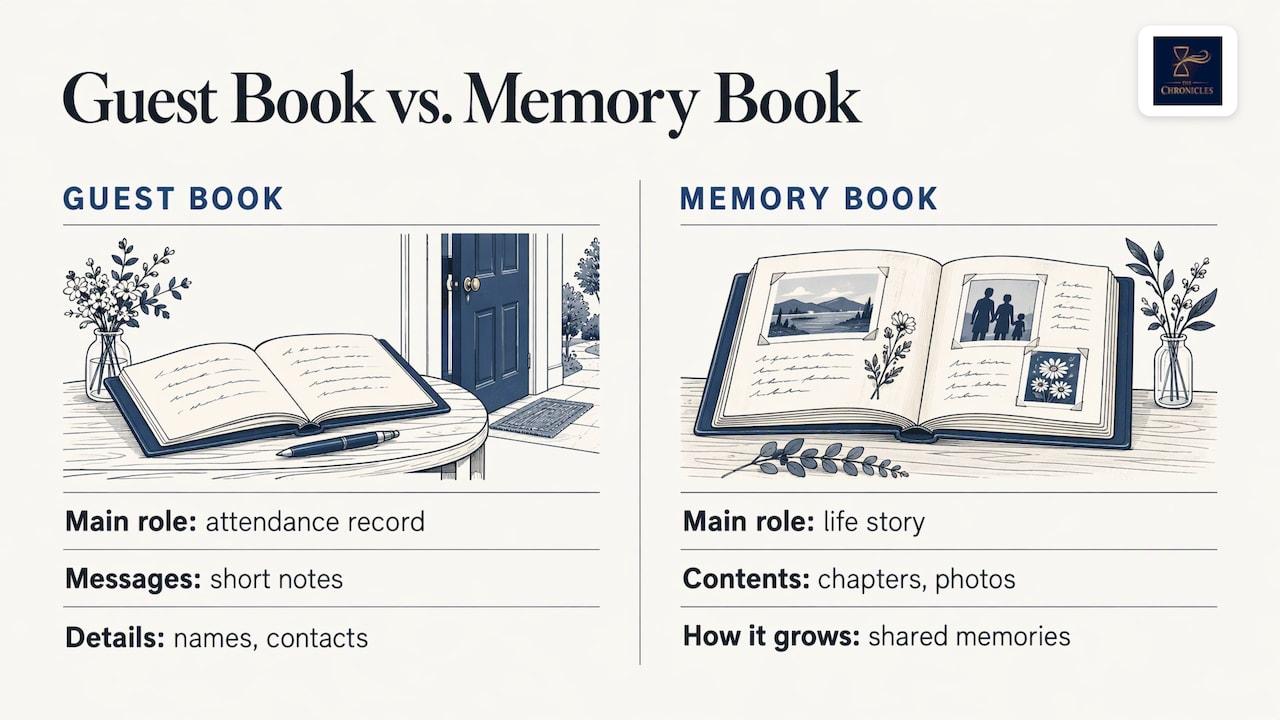
The guest book. Funeral.com explains that a traditional funeral guest book mainly creates an attendance record, and may preserve contact details, with a little room for short messages. Ever Loved adds a useful distinction: a registry usually records names only, while a memorial or condolence book leaves space for thoughts, feelings, memories and sometimes photographs.
The memory book. This is the one people search for when they type "celebration of life memory book" or "life celebration book." It is written and assembled. It tells the story of a life in chapters, with photos, and it can keep growing as more people share what they remember.
If you are planning a service, you can put a guest book at the door and start the memory book at the same time. The guest book becomes one page of the larger story: who came, what they said, how the day felt.
What to include in a celebration of life book
A good book is not a longer obituary. It is a collection of moments. Here is a structure that works for most families, whether the person lived to ninety or left too soon.
The life in brief
Open with one or two pages: where they were born, where they grew up, the places they lived, the work they did, the people they loved. Keep it plain. Dates and names matter later, when a grandchild wants to know which town the family came from.
Chapters, not a timeline
You can organize by decade, but chapters built around a theme are easier to write and more fun to read. A few that tend to work:
- The kitchen table (recipes, holidays, who sat where)
- Work and the people they worked with
- Friends and the trouble they got into
- Faith, community and causes they cared about
- The places they loved, from the lake house to the corner diner
- What they taught us
Each chapter can be a page or a few. Short is fine. One honest paragraph about a Sunday ritual beats three pages of general praise.
Stories from other people
This is what turns a book about someone into a book by everyone who knew them. A coworker's memory of their first day, a neighbor's story about snow shoveling, a grandchild's favorite nickname: these are the pages families reread.
Photos with captions
A photo without a caption becomes a mystery in twenty years. Put names, the year if you know it, and a line about what is happening. "Dad and Uncle Ray, Lake Erie, the summer the boat wouldn't start" does more than a date alone.
The small details
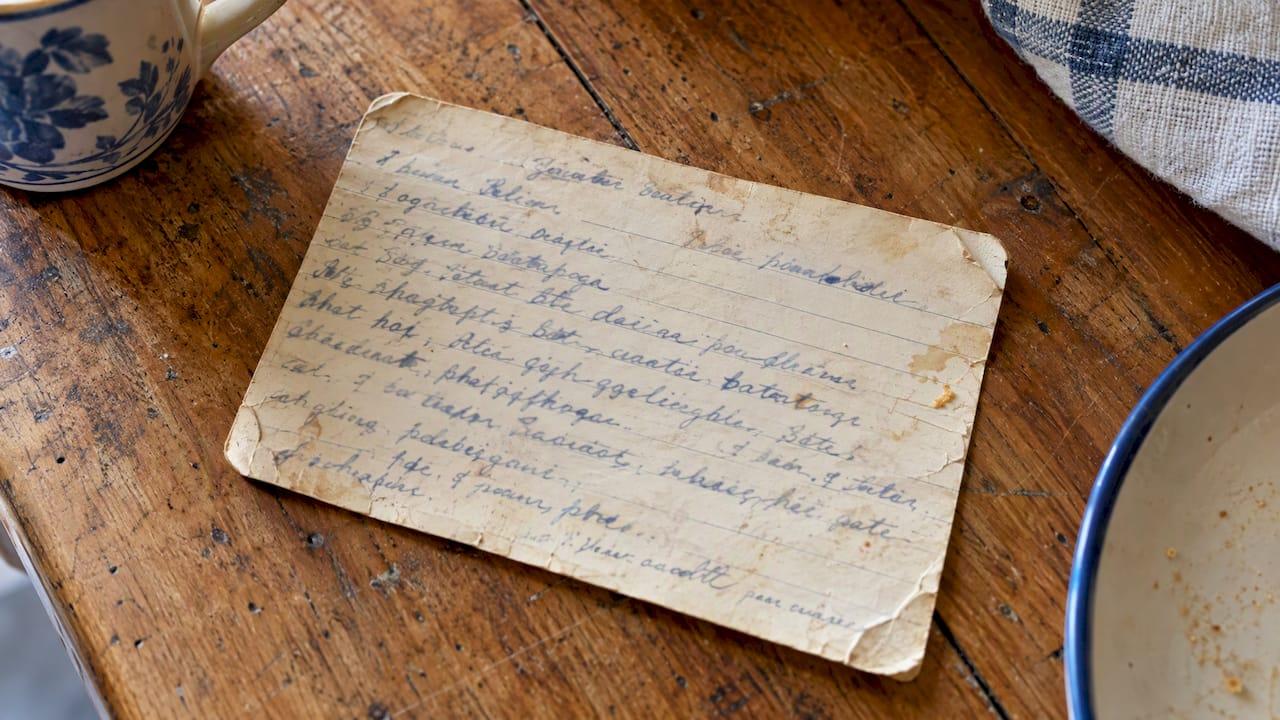
Catchphrases, favorite songs, the way they signed birthday cards, their handwriting on a recipe card. These are the details that make a reader say, "That's exactly her." Scan a handwritten note if you have one.
Messages from the service
If you held a celebration of life, include a page for the eulogy or readings, the music played, and a few messages guests wrote. That keeps the day itself in the story.
How family and friends can contribute
The hardest part is rarely writing. It is getting memories out of people who are grieving, busy, or not comfortable with technology. A few things make it easier.
Ask one question at a time. "Send me a memory" feels like homework. "What is the first thing you think of when you picture Grandpa in his workshop?" is something a person can answer in two minutes.
Use email for people who avoid apps. Many older relatives will answer an email even if they will never create an account. Send a single question, tell them a few sentences is plenty, and let them reply in their own words.
Accept voice and photos. A relative who cannot type may happily record a voice message or send an old snapshot. You can write the caption later.
Set a gentle window. Give people two or three weeks, then send one reminder. Say the book can keep growing, so no one feels they missed their chance.
Protect the quiet ones. Some people will want to contribute privately, not in a group thread. Let them reply directly to you.
Prompts that bring out real stories
A funeral home's remembrance booklet worksheet suggests starting with where the person was born and raised, then moving through childhood, school, work, travel, family, community, hobbies, faith, favorite places, holidays, friends and challenges. It also asks what they wanted to teach their children, what changed their life, and what their idea of a perfect day was.
That list translates well into questions for contributors:
- What is your earliest memory of them?
- What did they do that made you laugh until you couldn't breathe?
- What did they teach you, without meaning to?
- Where would we always find them on a Saturday?
- What is one thing you wish everyone knew about them?
- What would their perfect day have looked like?
If you want to go deeper with an older relative who is still with us, the same approach works for living stories. Our guide to recording a grandparent's life story uses the same one-question-at-a-time rhythm.
How to choose and arrange photographs
Photos are the part families fear most, because there are hundreds, in shoeboxes, phones and other people's albums. Do not try to sort everything. Follow this order.
- Gather first, judge later. Ask relatives to send their favorites. Scan or photograph prints with your phone in good daylight, away from glare.
- Pick the faces. Choose photos where you can see the person's expression. A smiling candid shot at a picnic often says more than a stiff studio portrait.
- Cover the whole life. Aim for childhood, young adulthood, family years and recent years, so the book is not all one decade.
- Choose the story photos. Pick the images that go with a memory someone has written. A photo and a paragraph that belong together are stronger than either alone.
- Limit yourself. For most books, thirty to sixty photos is enough. A few strong images per chapter are better than a crowd of near-duplicates.
- Leave white space. One large photo with a caption is easier on the eye than six crammed together.
When you are unsure whether to include a photo, ask: does it show who they were, or does it just show that they were there? Keep the first kind.
If you have photos but few written details, a tool that starts from the image can help. Our page on how to write a life story from photos shows how a photo and a few details can become a first draft of a chapter that you then correct and make your own.
Printed, digital, or both
A printed book is the one that sits on the coffee table and gets passed around at holidays. A digital version travels: it can be shared with a cousin overseas and updated when a new memory turns up. Most families are happiest with both.
Two practical points on keeping the digital side safe. The Library of Congress recommends meaningful file names, regular backups to multiple locations, and migrating files to current storage media every 3 to 5 years, and converting old or proprietary formats before they become obsolete. In plain terms: name the files so a stranger could understand them, keep copies in two or three places, and check them now and then.
When you choose a service to make the book, a few questions are worth asking:
- Who owns the stories once they are uploaded?
- Can you export everything if you leave?
- Is your family's writing and photos used to train AI?
- Can relatives contribute without creating accounts?
- Can you order a printed copy later, and for other family members?
The answers matter more for a memorial book than for almost anything else you will make.
A simple plan: from first idea to finished book
You do not need a perfect plan. You need a gentle one.
- Week one: decide the shape. Choose a title, a few chapter themes and who will be the main editor. One person holding the thread keeps things moving.
- Week one: send the first questions. Email or text three or four relatives and friends, one prompt each.
- Weeks two and three: collect photos. Ask for favorites and the story behind them. Scan old prints.
- Week three: write the opening. Draft the life in brief, a few paragraphs, and have a sibling or parent check names and dates.
- Week four: assemble the chapters. Place stories and photos together, add captions, and read it aloud to catch awkward lines.
- Week five: share a preview. Let close family read it before printing. Someone will remember a name you missed.
- Print, then keep going. A book does not need to be final. You can add a new chapter next year, on the anniversary or at a reunion.
If you are making this soon after a loss, go slowly. It is fine to write one chapter and stop. Our guide to making a memory book after someone dies is written for exactly that pace.
Our perspective
We built The Chronicles because most families do not lack memories. They lack a way to gather them while the people who hold them are still here to share them.
When someone dies, stories scatter. One sibling has the photos, a cousin has the funny story, a friend has a voicemail nobody else knows exists. A celebration of life book is a chance to bring them into one place, and we think it should not feel like a second job on top of grief.
That is why we focus on turning photos and a few details into written chapters, and why relatives who avoid technology can contribute by answering simple emailed questions, with no login. It is also why we pledge never to use your family's data to train AI, and why your family keeps ownership of the stories, with easy export.
Where a voice matters, we offer real voice narration, and voice cloning only with consent. Hearing someone read a chapter in a familiar voice is something a printed page cannot do.
The book you make should be yours. We think the best ones stay open for a long time.
Kevin
Turn memories into a book with The Chronicles
If you would like help shaping the words, The Chronicles lets you start with photos and short memories and turns them into chapters you can edit. Family members can add their own stories by replying to guided emails, and you can add narration in a real voice. When you are ready, you can order a printed book.

You can start on the Free plan at $0. The Chronicle plan is $7 per month and the Family plan is $15 per month. Printed books are bought separately: Paperback starts from $49 and Hardback from $99. See the options on our home page or look at the printed book choices. For a book built around remembrance, start with our memorial memory book page.
FAQ
What is the difference between a celebration of life book and a funeral guest book?
A guest book is mainly a record of who attended, often with names and contact details and room for a brief message. A celebration of life book tells the person's story with photos, chapters and memories from many people. Many families use a guest book at the service and keep the longer memory book going afterward.
Can I make a celebration of life book if I only have a few photos?
Yes. A book can work with a dozen photos if each one has a story attached. Stories from friends, a scanned recipe card, a favorite song or a handwritten note can fill in the rest. You can also add photos later as relatives find them.
How do I get older relatives to share memories?
Ask one specific question at a time, and let them answer by email, phone or voice recording. Tell them a few sentences is enough. Questions about a place, a holiday or a favorite saying tend to open up more than broad requests.
Should the book be printed or digital?
We suggest both. A printed book is the keepsake for the family shelf, and a digital copy can be shared, updated and backed up. Keep the digital files in more than one place so the book survives a lost phone or a failed drive.
How long should a celebration of life book be?
There is no right length. Many families land on a few chapters, thirty to sixty photos and a handful of contributed stories. Start small and let it grow. A short book finished in a month is worth more than a perfect one that never gets made.
Sources
- Celebration of Life: Planning Guide & Ideas, Funeralwise
- How To Set Up A Memorial Guest Book, Ever Loved
- Funeral Guest Books: What to Choose, What to Write, Funeral.com
- Creating your Remembrance, Fredrickson Funeral Homes
- Preserve Your Papers, Library of Congress
Recommended
From the founder
Start your first chapter — three minutes, no account.
Drop in a photograph of someone you love. Write three sentences about a moment with them. The Chronicles writes the chapter.
Try it free →Questions or thoughts? kevin@thechronicles.life — I read everything.